
Fayette County Criminal Case Files
A criminal court record in Fayette County is the court file, not the arrest file. It begins when a criminal matter is opened in court and then grows as the case moves through arraignment, motions, hearings, plea, trial, dismissal, sentence, probation, or appeal. The Fayette County Clerk of Courts is the main record office for Superior Court, State Court, Magistrate Court, and Juvenile Court case records, while Probate Court and municipal courts keep records for their own matters.
The court level matters. Fayette County Superior Court is the general-jurisdiction trial court and handles felony criminal cases in the Griffin Judicial Circuit. Fayette County State Court handles misdemeanor criminal cases and many traffic offenses. Magistrate Court handles warrants, first appearances, bond hearings, and preliminary hearings. Municipal courts in Fayetteville, Peachtree City, and Tyrone may hold city traffic or ordinance matters. Arrest and booking details remain with the Sheriff's Office and jail, while the full case file and court outcome belong in the court record.
Fayette County residents looking for the filed charge itself may also need the arrest-to-charge pathway on the Fayette County arrest records and court charges page. That is a narrower view of the charging step. The criminal court file is broader because it follows the case through final court action.
Search Fayette County Criminal Records
Start with the Fayette County Clerk online services page for public docket links and case-record tools used by the Clerk of Courts. If the case number is known, use it first. A name search is useful when no case number is available, but common names should be narrowed by court, date range, and case type where the portal permits it.
- Identify the court first. Felony cases usually belong in Superior Court, while misdemeanors often belong in State Court unless a municipal court has the case.
- Open the Clerk's online services path and choose the criminal or case docket option that matches the court.
- Search by case number, defendant name, or available date range. Exact spelling matters.
- Open the docket entry list and review charges, bond entries, hearing events, plea, disposition, and sentencing entries.
- Contact the Clerk of Courts for certified copies or older records that do not appear online.
The Georgia statewide systems are not substitutes for the Fayette County criminal court record. Georgia Felon Search is a paid statewide felony-history name search. The Georgia Department of Corrections offender query is for sentenced prisoners or supervision records. Neither one provides the full local docket, filings, motions, orders, and sentence sheet kept in Fayette County.
To understand the state public registry context that can follow some convictions, the Georgia Bureau of Investigation sex offender registry page explains the state registry source. The image below comes from that official state registry resource.
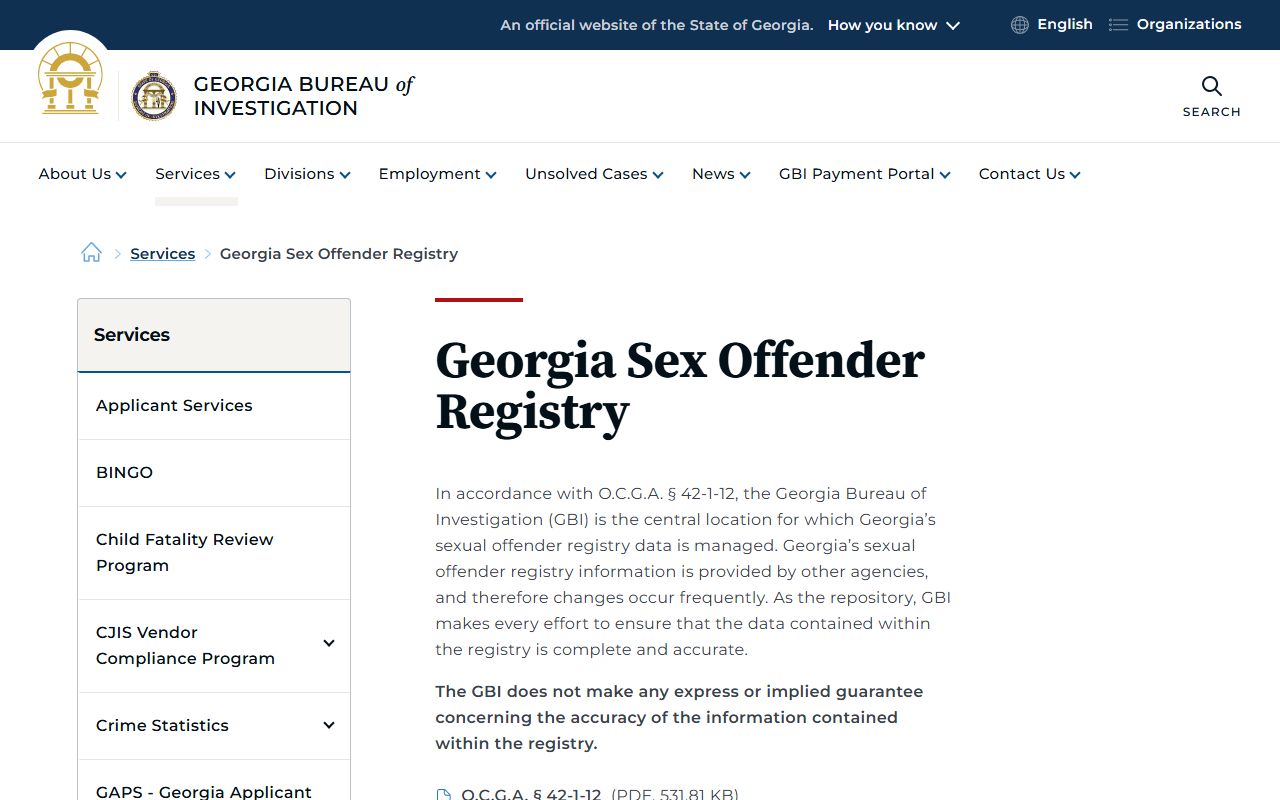
Registry listings are law-enforcement records tied to qualifying offenses. They should not be treated as the Fayette County criminal court file itself.
Fayette County Criminal Case Flow
Criminal court records in Fayette County show case events in order. A person may first appear in jail or Magistrate Court records after arrest, but the continuing court case is tracked through the docket maintained for the charging court. Bond decisions, arraignment, motions, continuances, pleas, trial settings, and final disposition can all appear as separate docket entries.
Case flow: Charges Filed › Arraignment › Pretrial and Motions › Plea or Trial › Disposition › Sentencing
| Stage | What the Record Can Show |
|---|---|
| Charges filed | Accusation, indictment, warrant-linked charge, statute, offense level, and filing date when public. |
| Arraignment | The formal reading or presentation of charges and the defendant's plea. |
| Pretrial and motions | Bond orders, discovery motions, suppression motions, continuances, notices, and hearing dates. |
| Plea or trial | Guilty, not guilty, nolo contendere, trial verdict, acquittal, or mistrial entries. |
| Disposition | Dismissal, nolle prosequi, conviction, acquittal, transfer, or other final action for each charge. |
| Sentencing | Jail or prison time, probation, fines, court costs, restitution, conditions, and credit for time served where public. |
Federal prosecutions are outside the county court system. If the case was brought by federal authorities, use the U.S. District Court for the Northern District of Georgia and PACER rather than the Fayette County Clerk search.
Fayette County Criminal Record Fields
A public criminal case record is field-driven. The same case may have a header, parties, attorneys, charge entries, hearing entries, document links, and financial entries. Some documents may be view-only, fee-based, available as e-certified copies, or held for office request rather than public download. Sensitive fields may be redacted.
| Field | What It Shows |
|---|---|
| Case number | The local court identifier assigned by the Clerk or court system. |
| Court | Superior, State, Magistrate, Juvenile, or municipal court depending on the case. |
| Defendant | The adult defendant name when public; juvenile names are restricted. |
| Charges | Charge text, offense level, statute, arrest date, or warrant-linked information if displayed. |
| Docket entries | Filings, hearings, orders, plea events, bond changes, disposition entries, and appeals. |
| Plea | Not guilty, guilty, nolo contendere, or another plea entry if entered. |
| Disposition | The result for each charge, such as dismissed, nolle prosequi, guilty, not guilty, or transferred. |
| Sentence | Probation, jail or prison term, fine, court costs, restitution, or special conditions where public. |
The Georgia public sex offender registry search is a separate public safety search that may reflect conviction-based registration duties after qualifying criminal cases.
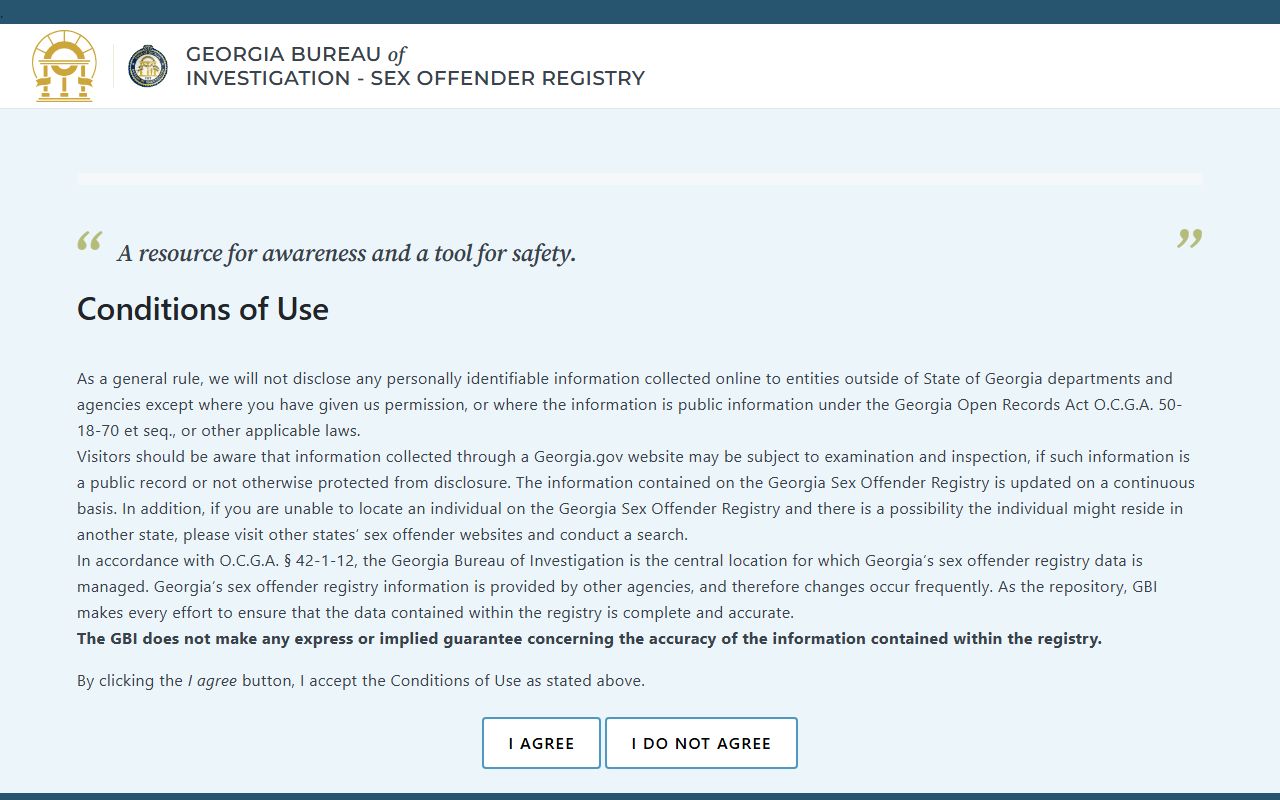
A registry result can point to a public safety requirement, but the docket is still needed to confirm the charge history, plea, disposition, and sentence in Fayette County.
Fayette County Charges vs Convictions
A criminal charge is not proof of guilt. A Fayette County criminal court record can list charges that were later reduced, amended, dismissed, or not prosecuted. A conviction appears only after a guilty plea, a nolo contendere plea where treated as a conviction for the case, or a guilty verdict. Read each count separately because one case can have several charges with different outcomes.
| Point | Charge | Conviction |
|---|---|---|
| Meaning | A formal allegation filed or carried into court. | A finding or plea of guilt entered by the court. |
| Timing | Appears near the start of the case or after amendment. | Appears after plea, verdict, or final disposition. |
| Effect | May support bond, hearings, and prosecution steps. | Can support sentence, probation, fines, and collateral consequences. |
| Record reading | Check current status for each count. | Check sentence and whether appeal or restriction applies. |
Georgia terminology can be specific. A nolle prosequi means the prosecutor has chosen not to pursue the charge. A disposition is the court-record outcome for a charge or case. A sentence is the punishment or conditions imposed after conviction.
Access Limits for Fayette County Criminal Records
Public access is broad, but it is not unlimited. Georgia's Open Records Act, including O.C.G.A. 50-18-70 and O.C.G.A. 50-18-71, supplies the baseline for agency public-record access, response timing, and lawful fees. Court case access also depends on court rules, clerk procedure, sealing orders, and redaction duties.
Access note: Sheriff incident reports, jail records, and accident reports use the Sheriff's open-records process, while criminal case files use the Clerk or court that maintains the docket.
Fayette County juvenile criminal matters are not searched like adult criminal cases. Georgia juvenile-record law makes many delinquency, dependency, and child-related records confidential. Adoption records, mental-health material, protected addresses, full Social Security numbers, financial account numbers, minor names, victim-safety details, and sealed exhibits may also be withheld or redacted.
Fayette County Sealed vs Restricted
Georgia often uses the term record restriction rather than expungement. Restriction can limit public dissemination of eligible criminal-history information, but it does not promise that every government record is destroyed. Courts, law enforcement, prosecutors, and some licensing or employment contexts may still have lawful access.
| Point | Sealed | Restricted |
|---|---|---|
| Basic effect | Hidden from ordinary public access by court order or rule. | Limited from public criminal-history dissemination under Georgia law when eligible. |
| Common source | Court order, confidentiality law, or protected case type. | O.C.G.A. 35-3-37 and related agency or court process. |
| Public portal | May hide the whole file or show only limited docket data. | May affect criminal-history dissemination and public visibility. |
| Not the same as | A case never existing. | Automatic deletion of every court, police, jail, or prosecutor record. |
Eligibility depends on the arrest, charge, court, disposition, date, offense type, and criminal-history context. A person seeking restriction should identify the exact Fayette County case number, originating agency, charge, and disposition before contacting the court, prosecutor, or agency.
Fayette County Criminal Copy Requests
Certified copies are requested from the record-holding court office, usually the Clerk of Courts for Superior, State, Magistrate, and Juvenile Court records that the Clerk maintains. The Clerk's public pages provide routes for online services, forms, fees, and electronic certified copies where available. Older, archived, sealed, or restricted files may require a phone call or in-person request before any copy can be released.
A good request includes the defendant name, case number, court, approximate filing date, document name, and whether a plain or certified copy is needed. If the record is a federal criminal case tied to Fayette County conduct, the U.S. Attorney's Office for the Northern District of Georgia may appear in the prosecution history, but official federal docket documents are handled through the federal court system.
The U.S. Attorney's Office for the Northern District of Georgia is useful only when the matter is federal rather than a county Superior, State, Magistrate, or municipal case.
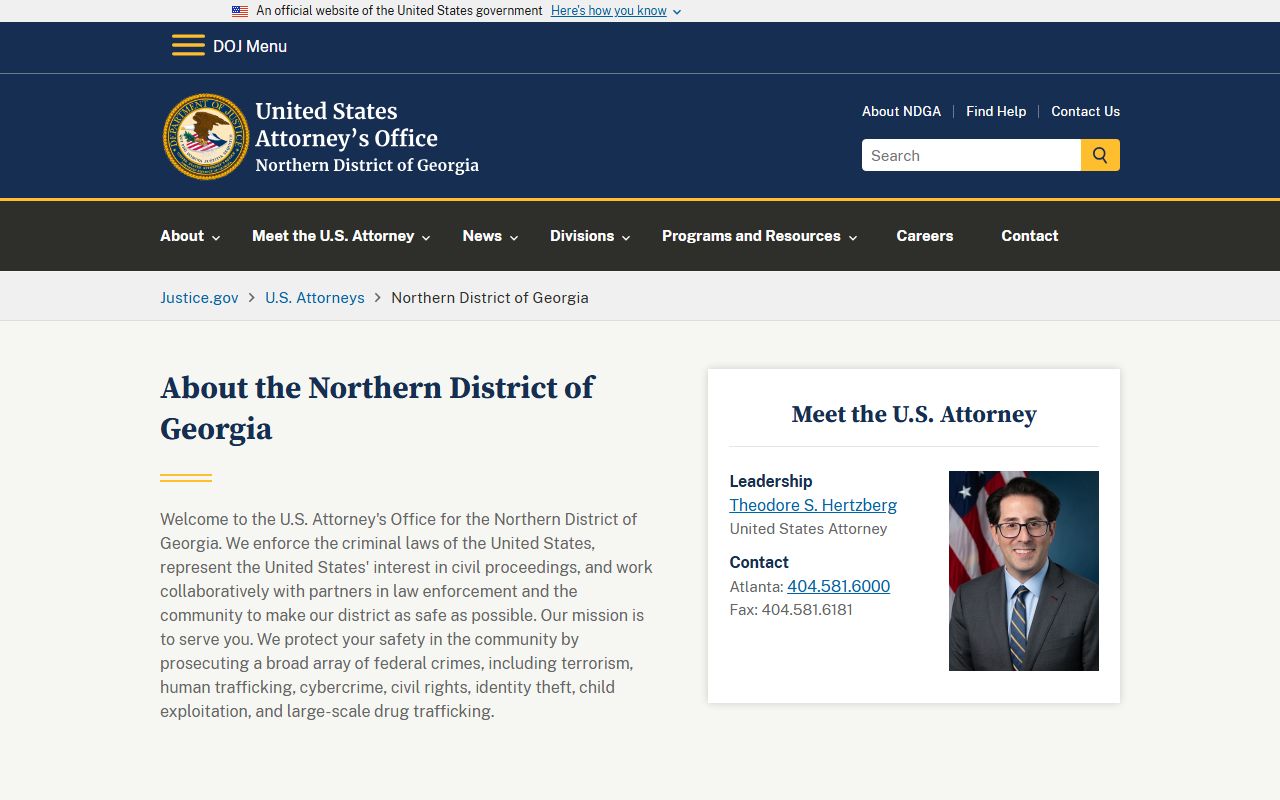
When a federal source appears in the research path, confirm whether the case was filed in federal court before searching county criminal records.
Note: For immediate custody, release, bond, or booking status, use the Sheriff's jail channel rather than the court docket.