
What Fayette County Dockets Show
A court docket is the running event list for a case. In Fayette County, a docket can show the case number, filing date, party names, case type, status, hearing dates, judge, courtroom, and entries such as complaint filed, warrant issued, bond set, motion filed, order entered, plea entered, sentence imposed, judgment entered, dismissal, nolle prosequi, or appeal filed. It gives the public timeline of the case. It does not always include the full document image, exhibits, transcripts, sealed filings, or certified copy access.
Dockets matter because Fayette County has several possible court channels. Superior Court handles felonies, divorce, equity, land-title matters, major civil cases, and appeals from lower courts as allowed. State Court handles misdemeanors, many traffic cases, and civil cases within its jurisdiction. Magistrate Court handles warrants, first appearances, bond hearings, preliminary hearings, small claims, and dispossessory actions. Probate Court handles estates, guardianships, conservatorships, marriage, and weapons-carry matters. Municipal courts handle city traffic and ordinance matters for Fayetteville, Peachtree City, Tyrone, and other city venues.
Find Fayette County Court Dockets
The primary local online route for Fayette County court dockets is the Fayette County Clerk of Courts online services page. That office supports Superior, State, Magistrate, and Juvenile records within its role, and the online services page routes users to case dockets, forms, e-filing, electronic certified copies, and related clerk tools. If the case is a city ticket, the next source is the municipal court named on the citation, not the county docket path.
- Start with the court name printed on the summons, ticket, notice, warrant, or filing receipt.
- Use the Clerk online services channel for Superior, State, Magistrate, and available Juvenile docket information.
- Enter the case number first if known, then use party name and filing date when the case number is missing.
- Review the docket entries for filing events, hearing settings, orders, disposition, sentence, judgment, or appeal activity.
- Contact the court office for certified copies, sealed or restricted entries, older archived files, and records not visible online.
For federal court dockets tied to events in Fayette County, the local county docket path is not the source. Use the U.S. District Court for the Northern District of Georgia for federal district cases.
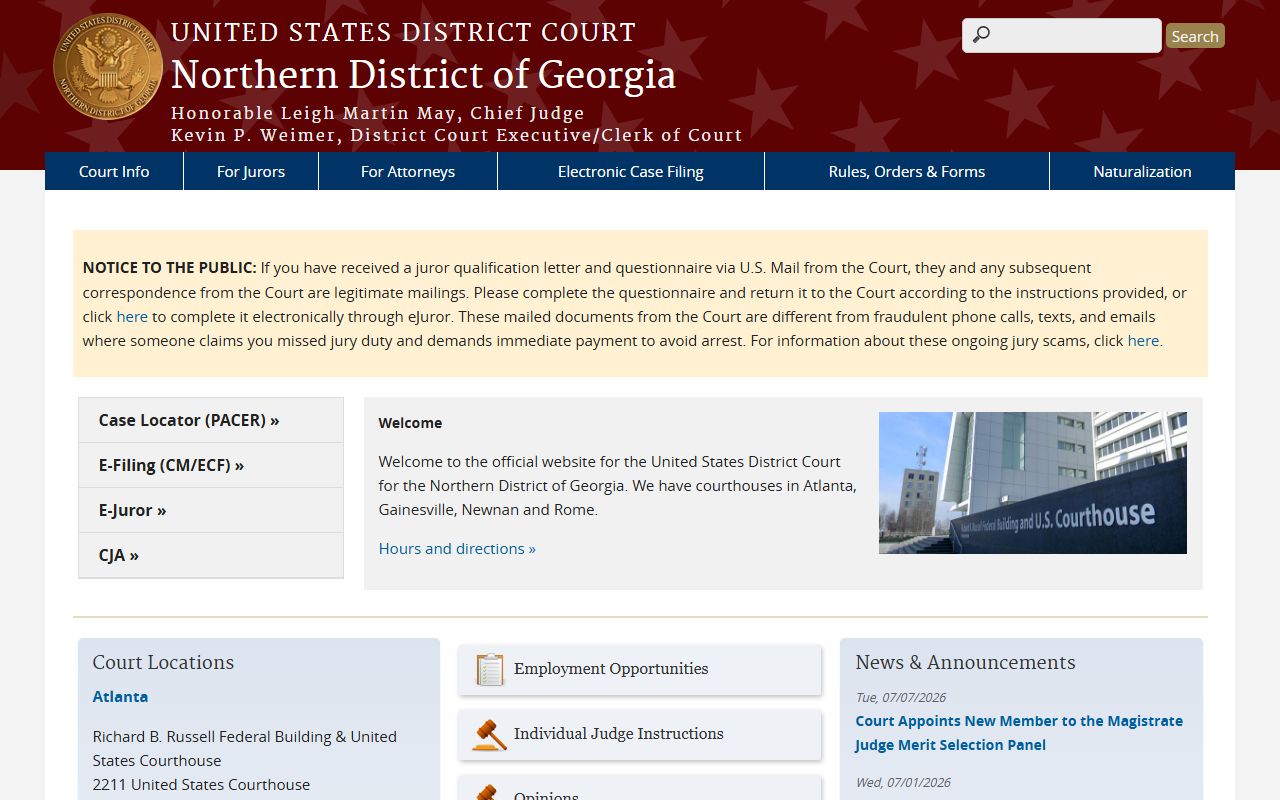
The federal district court source is separate from Fayette County Superior Court, State Court, Magistrate Court, Probate Court, and municipal court dockets.
Sample Fayette County Docket Fields
The research did not open a complete sample Fayette County case during capture, but the public record inventory identified the fields a user should expect in a typical docket result. A single docket entry is usually short. It may include the date, event label, filing party, short description, hearing information, and whether a document link or image is available. Some entries only mark that a filing occurred. Others show the final disposition, such as dismissed, judgment entered, plea accepted, sentence imposed, or nolle prosequi.
| Field | What It Shows |
|---|---|
| Case Number | The local identifier assigned by the court or clerk, with format varying by court and year. |
| Court | Superior, State, Magistrate, Probate, Juvenile, or municipal court source. |
| Entry Date | The date the docket event, filing, hearing, order, or judgment was entered. |
| Event Type | Complaint, answer, motion, hearing, order, bond, plea, sentence, judgment, dismissal, or appeal. |
| Party Filing | The party, attorney, prosecutor, or court actor linked to the entry, if shown. |
| Hearing Data | Date, time, courtroom, judge, hearing type, and result where public and scheduled. |
| Document Link | A view, download, e-certified-copy, or office-request path, when the record is available. |
| Status | Open, pending, disposed, closed, transferred, inactive, sealed, or restricted. |
Fayette County Docket Channels
Fayette County docket access depends on the court that owns the case. Superior Court dockets are the place to look for felony criminal cases, divorce, domestic-relations matters, equity cases, land-title disputes, and larger civil cases. State Court dockets can show misdemeanors, many traffic cases, and civil matters assigned to that court. Magistrate Court events can include warrants, first appearances, bond hearings, preliminary hearings, small claims, and dispossessory matters. Probate Court has its own record track for estates, wills, guardianships, conservatorships, marriage, and weapons-carry licensing.
- Fayette County Superior Court: felonies, divorce, equity, land-title cases, major civil matters, and eligible appeals.
- Fayette County State Court: misdemeanors, many traffic cases, and civil matters in State Court jurisdiction.
- Fayette County Magistrate Court: warrants, first appearances, bond, preliminary hearings, small claims, and dispossessory actions.
- Fayette County Probate Court: estates, wills, guardianships, conservatorships, marriage licenses, and weapons-carry matters.
- Municipal courts: Fayetteville, Peachtree City, and Tyrone for city traffic and ordinance dockets.
Juvenile Court exists in the Fayette County court structure, but juvenile docket access is restricted. Public-facing searches should not treat juvenile records like adult criminal or civil dockets. If a case involves a minor, dependency, delinquency, children in need of services, or termination of parental rights, the user should contact the proper court office and expect access limits.
Fayette County Dockets vs Records
A docket is a case index and event history. A full court record is broader. The full file may include pleadings, motions, exhibits, notices, orders, warrants, indictments, accusations, sentencing sheets, writs, judgments, and other documents. A docket can prove that an event occurred, but a certified copy of the order or judgment is often needed for legal use. The Clerk of Courts and the court office decide whether a document can be viewed online, copied, certified, redacted, or released only in person.
| Point | Docket | Full Case Record |
|---|---|---|
| Format | Event list with dates and short labels. | Documents, filings, orders, judgments, and exhibits where public. |
| Common Use | Track hearings, case status, and disposition. | Review legal filings, prove outcomes, or request certified copies. |
| Access | Often searchable online if public. | May require fees, redaction, e-certified-copy service, mail request, or office visit. |
| Limits | May omit document images or sealed entries. | May include restricted material that cannot be released to the public. |
Read Fayette County Docket Entries
Common docket terms are short because court staff use them to track case movement. Filing date means the date the case or document entered the record. Disposition means the final outcome of a charge or case. Judgment is the enforceable court decision in a civil case. Plea is the defendant's formal answer to a criminal charge. Nolle prosequi means the prosecutor has chosen not to pursue a charge. Continuance means a hearing or trial was rescheduled. Bond is security for release while a criminal matter is pending.
Criminal dockets can be easy to misread. A charge entry is not the same as a conviction. The arresting agency may list an initial offense, the prosecutor may file a different accusation or indictment, and the court may later show dismissal, plea, trial verdict, sentence, or restriction. Civil dockets can also change. A case may show a complaint, answer, motion, order, mediation, settlement, dismissal, judgment, writ, or appeal before the file is closed.
Note: A docket entry can confirm case activity, but a certified order is the safer proof of a court outcome.
Federal Dockets Near Fayette County
Fayette County is within the Northern District of Georgia for federal court purposes. Federal dockets are not kept by the Fayette County Clerk of Courts. A federal civil-rights suit, federal criminal case, bankruptcy matter, immigration-related federal case, federal tax case, habeas filing, or federal appeal must be searched through federal systems. The official federal docket path is PACER and CM/ECF. PACER can involve fees, and CM/ECF is the federal electronic filing and docket system used by courts and authorized filers.
The Northern District of Georgia CM/ECF login is the federal electronic case filing and docket access system for that district.
County docket searches should not be expected to return federal filings, even when the person, business, or event is in Fayette County.
Appeals from federal district-court cases go to the U.S. Court of Appeals for the Eleventh Circuit.
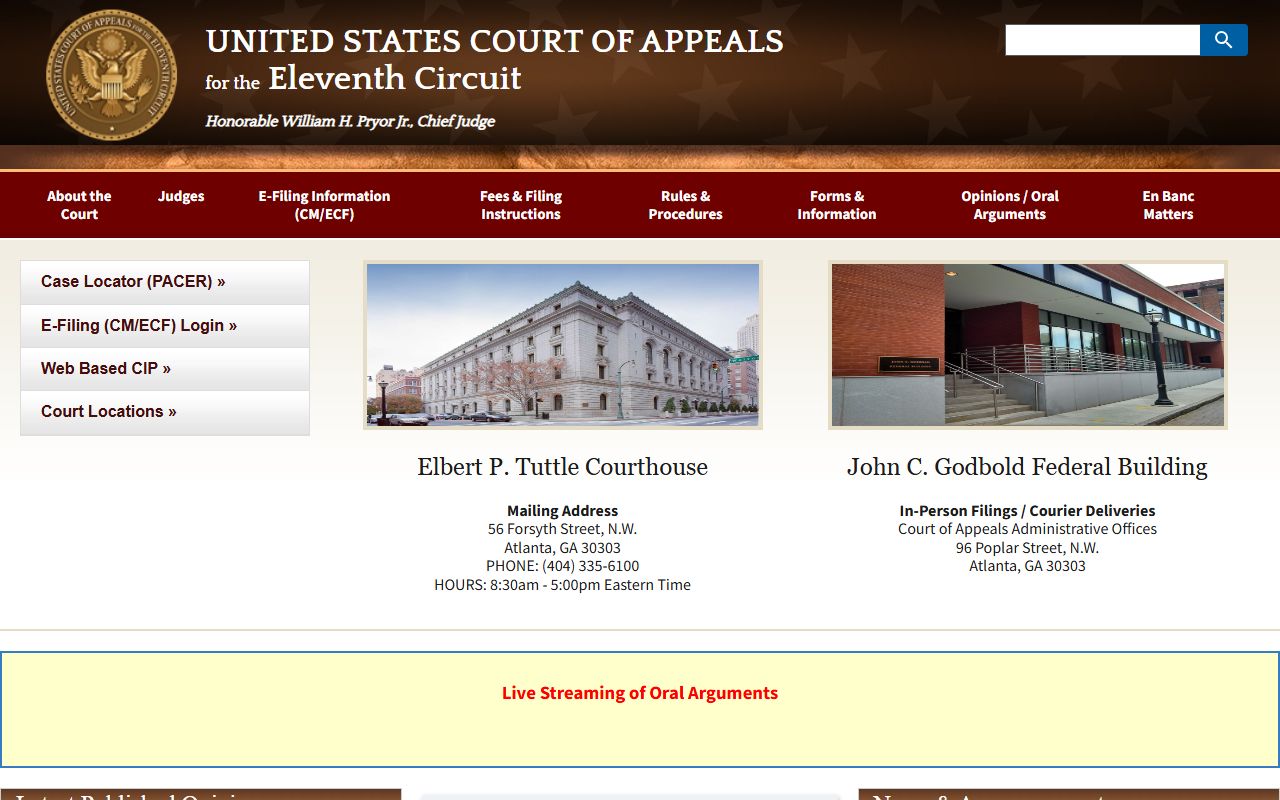
The Eleventh Circuit is a federal appellate court, not a Fayette County court, so its docket belongs in the federal record track.
Missing Fayette County Court Dockets
A missing docket does not always mean no case exists. The matter may be in Probate Court, a municipal court, a federal court, a state agency database, an archived file, or a restricted record category. The case may also be too new to appear online. For traffic matters, the citation itself is the controlling clue. For jail or arrest information, use the Sheriff or inmate lookup source first, then check the court docket after the case is filed. For driver-license effects, use Georgia DDS rather than the court docket alone.
When the docket cannot be found, contact the office that owns the likely record. Use the Clerk for Superior, State, Magistrate, and Clerk-supported case files. Use Probate Court for estate and marriage matters. Use the named municipal court for city citations. Use the Sheriff's Office for jail, booking, accident, and incident records. Use federal sources for federal cases and appeals.