
Search Fayette County Court Records
The main local starting point for Fayette County court records is the Fayette County Clerk of Courts online services page. The Clerk of Courts supports Superior Court, State Court, Magistrate Court, and Juvenile Court record functions, and the online services page links to case dockets, e-filing, electronic certified copies, real estate records, forms, and other clerk tools. The court case path is the right path for a civil lawsuit, felony case, State Court misdemeanor, garnishment, dispossessory matter, judgment, or public docket entry from one of those courts.
Before searching Fayette County court records, identify the court level. A felony, divorce, equity case, land-title case, or large civil matter belongs with Superior Court. Misdemeanors and many traffic matters belong with State Court unless a city court is named on the citation. Small claims, dispossessory actions, warrants, first appearances, bond hearings, and preliminary hearings may start in Magistrate Court. Probate Court holds estates, wills, guardianships, conservatorships, marriage licenses, and weapons-carry matters. City citations may be at Fayetteville, Peachtree City, or Tyrone Municipal Court rather than in a county case search.
- Read the record you already have, such as a ticket, complaint, summons, warrant, or notice, and identify the court name printed on it.
- Use the Clerk of Courts online services path for public Superior, State, Magistrate, and Juvenile docket channels that the Clerk makes available.
- Search by case number when available, because party-name searches can return similar names or miss records with spelling variants.
- Use party name, business name, filing date range, and case type when the case number is unknown or the record is older.
- Contact the Clerk, Probate Court, Sheriff, or municipal court when the online result is missing, restricted, archived, or not the record type you need.
For statewide filing and clerk-related services, the GSCCCA eFile portal may be relevant to selected Georgia filing and recording workflows.
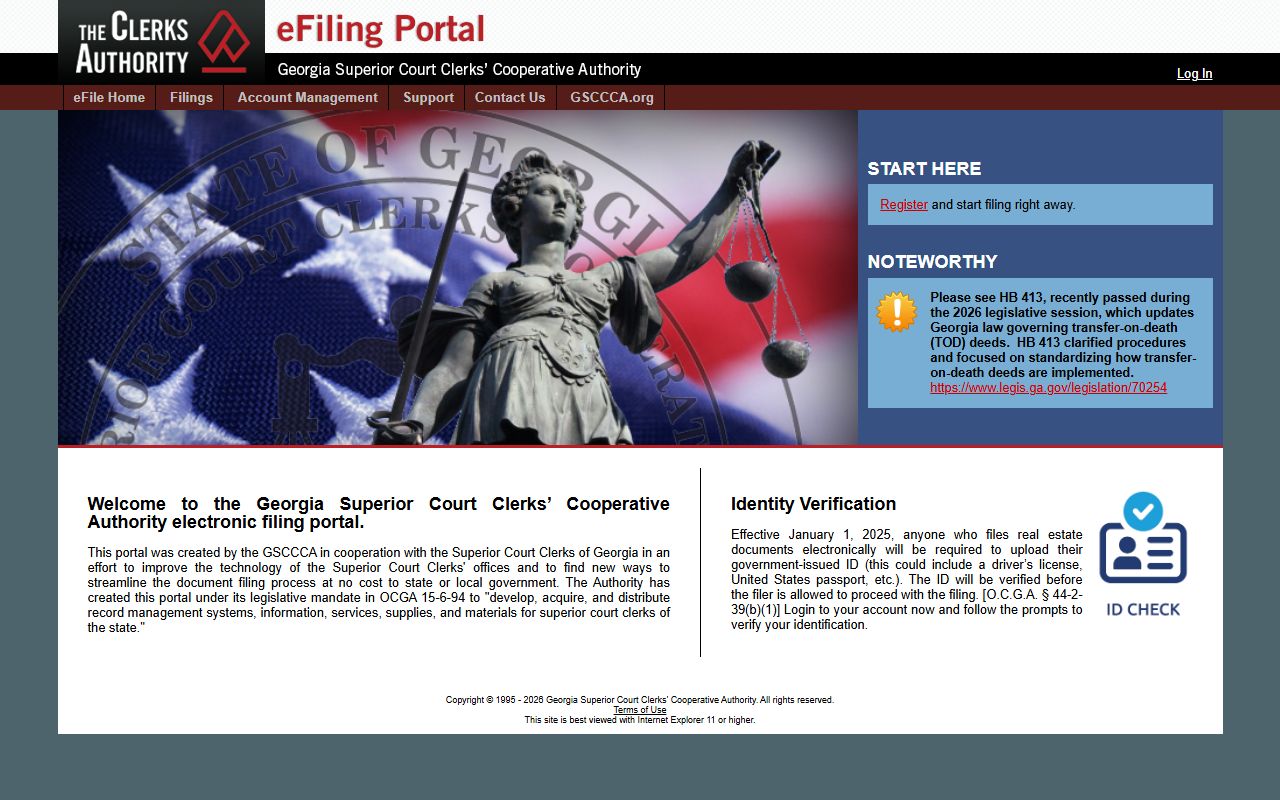
The GSCCCA channel is useful context for statewide clerk services, but it is not a substitute for choosing the correct Fayette County trial court or office.
Fayette County Court Records Fields
Fayette County court records searches are most accurate when the user treats the online form as a court-routing tool rather than a broad background check. The research inventory found case-number and party-name searching as the most important fields, with court or case type acting as a filter when the portal exposes it. Date range helps when a name is common or when a case may have moved from first appearance to a later trial-court file.
| Field Label | Type | Required | Notes / Format |
|---|---|---|---|
| Court / Portal Link | Link or dropdown | Yes by workflow | Choose Superior, State, Magistrate, Probate, municipal, GSCCCA, GDC, DDS, or Georgia Felon Search based on record type. |
| Case Number | Text | Optional unless exact lookup is required | Best field when known; format depends on court, case type, and year. |
| Last Name / Party Name | Text | Optional | Use last name, business name, petitioner, respondent, plaintiff, defendant, or estate name as appropriate. |
| First Name | Text | Optional | Helps narrow common last names and avoid mixing unrelated Fayette County court records. |
| Date Range / Filing Date | Date | Optional | Useful for older files, high-volume names, and records with similar party names. |
| Case Type | Dropdown | Optional if exposed | Civil, criminal, domestic, garnishment, dispossessory, probate, traffic, warrant, or ordinance. |
| Search | Button | Yes | Runs the query after the court path and search terms are selected. |
| Clear / Reset | Button | No | Clears current criteria where the vendor form includes that option. |
The Georgia Felon Search service is a separate statewide felony-history product, not a full Fayette County court file.
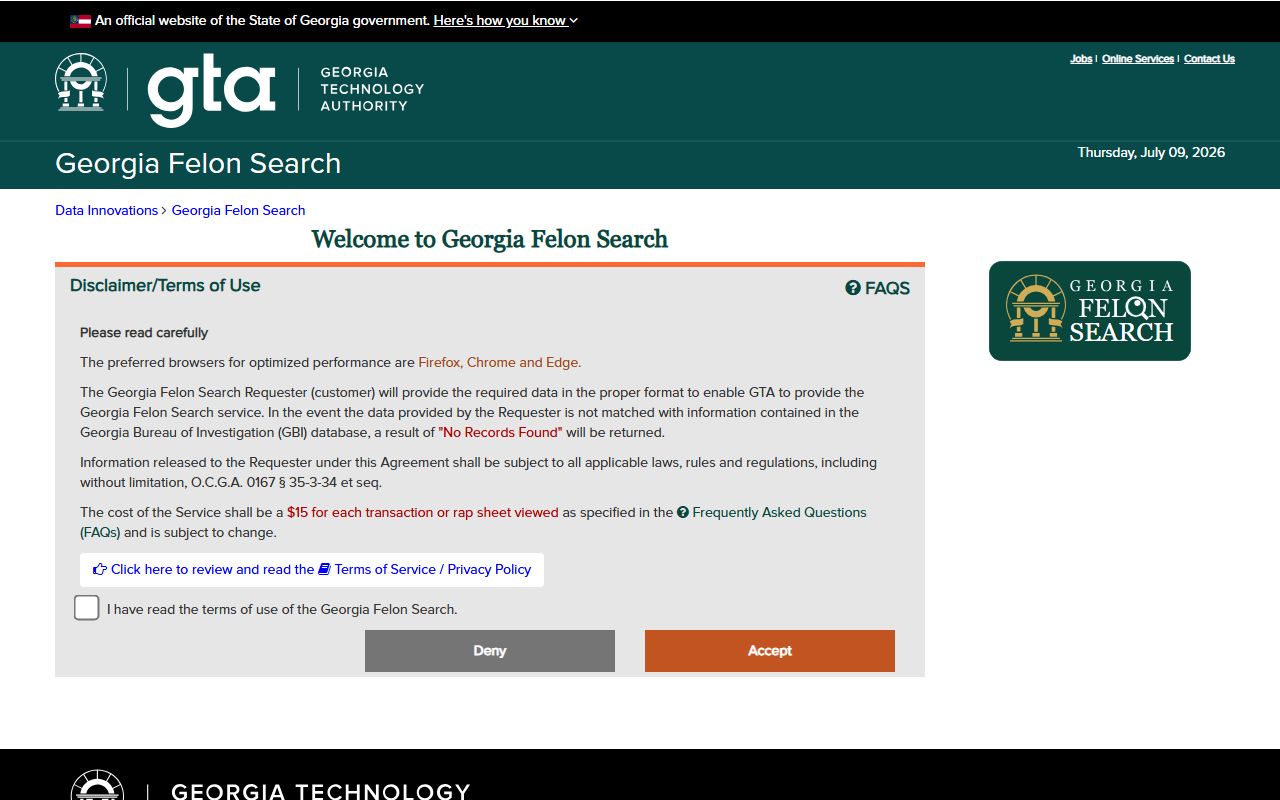
Use that state system only for the criminal-history question it answers, then return to the Fayette County case source for pleadings, dockets, orders, or certified copies.
Fayette County Court Record Types
Fayette County court records include several record families, and the correct record keeper depends on the case type. Civil case records may show complaints, answers, motions, orders, judgments, garnishments, writs, dismissals, or settlement documents in Superior, State, or Magistrate Court. Criminal court records may show warrants, accusations, indictments, bonds, pleas, hearings, docket entries, dispositions, sentencing papers, probation terms, fines, costs, restitution, or appeals. Domestic files, such as divorce and custody, are generally Superior Court records, while sensitive exhibits may be sealed or redacted.
Probate and marriage records are not ordinary Clerk case files in Fayette County. Probate Court handles wills, estates, guardianships, conservatorships, marriage licenses, and weapons-carry licensing. Traffic and ordinance records may be filed in State Court or in a city municipal court. Juvenile matters are restricted and should not be treated like adult public case records. Mental-health proceedings, adoption files, and protected-order details can be limited even when a case index exists.
- Civil records: lawsuits, judgments, garnishments, dispossessory actions, writs, and related orders.
- Criminal records: felony and misdemeanor case files, formal charges, pleas, dispositions, sentences, and appeal entries.
- Family records: divorce, custody, support, contempt, and protective-order docket components, with sensitive material limited.
- Probate records: estate, will, guardianship, conservatorship, marriage-license, and weapons-carry matters held by Probate Court.
- Traffic records: State Court or municipal citation files, separate from Georgia DDS driving histories.
What Fayette County Court Records Show
A public Fayette County case record is usually a mix of header data, party data, event entries, hearing information, and document references. Some records also show charge text, statute references, bond, plea, disposition, sentence, probation terms, fines, court costs, restitution, judgment amounts, garnishment data, or payment status. A docket entry may be visible when the underlying document is not online. Certified copies, older records, and documents that require redaction may need an office request instead of a direct download.
| Field | What It Shows |
|---|---|
| Header | Case number, court name, case style, filing date, case type, and case status. |
| Parties | Adult or business party names, such as plaintiff, defendant, petitioner, respondent, state, estate, ward, or applicant. |
| Attorneys | Attorney of record and represented party, sometimes with bar-number information. |
| Events | Docket-entry date, entry type, description, filing party, hearing entry, order, judgment, or document link. |
| Criminal Metadata | Charge text, statute, offense level, arrest date, bond, plea, disposition, and sentence when public. |
| Civil Metadata | Claim type, judgment, writ status, garnishment employer or garnishee where public, and payment status. |
| Documents | Pleadings, orders, warrants, indictments, accusations, sentencing sheets, writs, notices, and judgments if available. |
| Redactions | Social Security numbers, full dates of birth, account numbers, minor names, protected addresses, medical data, or sealed exhibits. |
For a federal case connected to Fayette County, use PACER federal court records access instead of the county Clerk portal.
Federal civil, criminal, bankruptcy, and appellate files are separate from Fayette County court records, even when the parties live in the county.
Fayette County Court Records Access
Georgia access rules draw an important line between court case files and other government records. The Georgia Open Records Act definition statute sets a broad public-record policy for agency records. That does not mean every court document is online or open without limits. Court records are requested through the court or clerk that maintains the file, while sheriff incident reports, accident reports, jail records, and agency files use the law-enforcement open-records process.
Fayette County users should send each request to the office that keeps the record. The Clerk of Courts is the practical channel for Superior, State, Magistrate, and Juvenile case records within the Clerk's role. Probate Court is the channel for estate, guardianship, conservatorship, marriage-license, and weapons-carry matters. Municipal courts are the channel for city traffic and ordinance files. The Sheriff's Office is the channel for booking, incident, accident, jail, and law-enforcement records that are not court case files. State systems handle Georgia Felon Search, GDC offender data, and DDS driver histories.
Note: Certified copies may require a Clerk or court request even when a docket entry can be viewed online.
The Open Records Act is still useful for non-court agency records, and the Georgia public-record definitions page gives the baseline access rule.
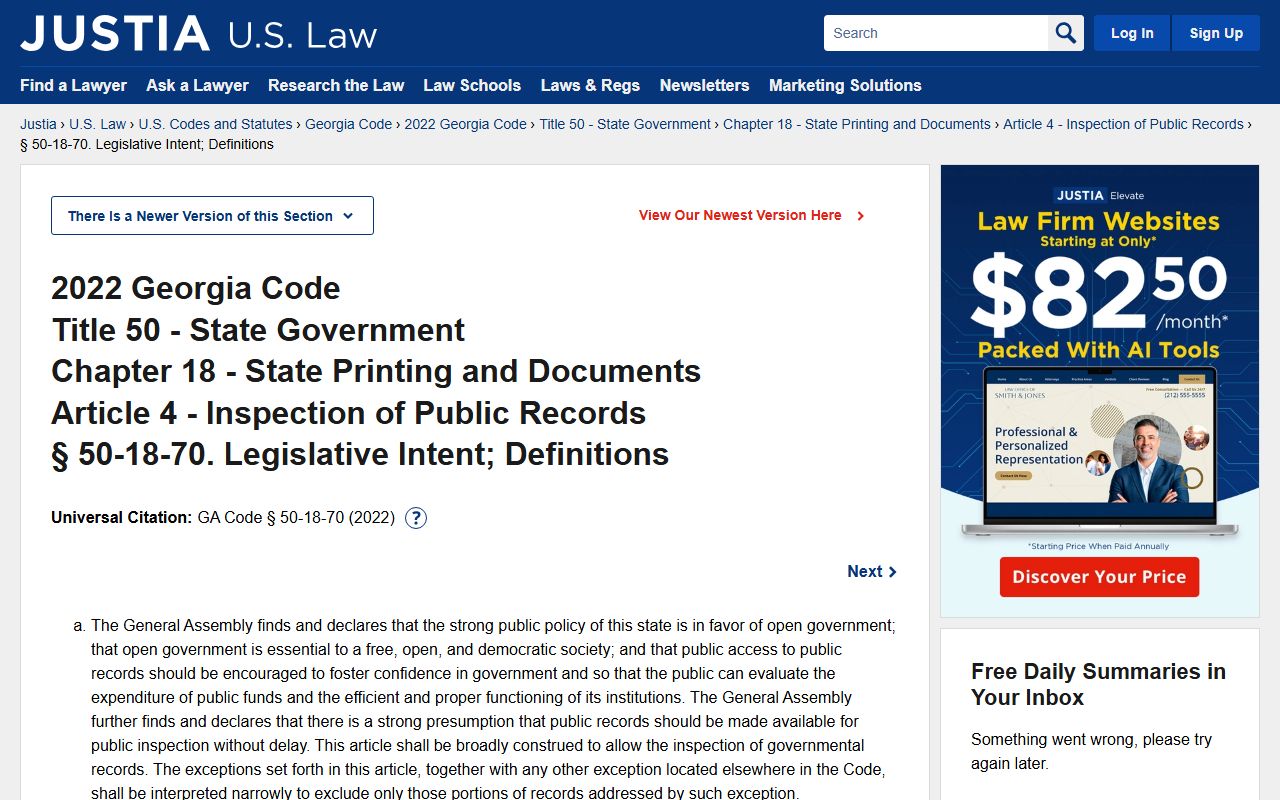
The statute helps explain why agency records may be requested, but the originating court or clerk still controls court-file access, redaction, and certification.
Restricted Fayette County Court Records
Some Fayette County court records are public only in part, and some are not public at all. Juvenile delinquency, dependency, children-in-need-of-services, and termination matters are confidential under Georgia juvenile law. Adoption records are sealed by statute and should not be treated as routine civil filings. Guardianship, conservatorship, medical, mental-health, incapacity, domestic-abuse, and victim-safety material may be limited or redacted. Protective-order cases may have a public docket while addresses, minor information, and safety-related details remain sealed.
Georgia also uses record restriction for eligible criminal-history records. Restriction can limit public dissemination after certain dismissals, nolle prosequi dispositions, completed sentences, or other qualifying outcomes, but it does not erase all government records and does not remove all lawful access by courts, law enforcement, prosecutors, or licensing bodies. A person seeking restriction needs the exact arrest, charge, case number, disposition, and originating agency before asking the court, prosecutor, or agency what process applies.
Fayette County Court Records Requests
When an online search does not show the record, the fallback is a direct request to the correct office. Bring or include the case number if known, full party names, the court, the record type, date range, document name, and whether a plain or certified copy is needed. For older files, sealed files, juvenile matters, adoption records, and records that do not appear online, call first and ask whether the file can be inspected, copied, mailed, or released only by court order.
Fayette County Clerk of Courts
1 Center Drive
Fayetteville, GA 30214
770-716-4290
Call before visiting for older, sealed, archived, or restricted records.
Mail requests should describe the record clearly and include payment as instructed by the office. If the request concerns a city ticket, use the municipal court named on the citation. If it concerns a sheriff incident, accident, booking, or jail record, use the Sheriff's open-records process rather than the court-record channel.